What makes Korean skincare products consistently outperform their Western counterparts? The answer lies in a precise combination of science-backed formulations and time-tested natural extracts. Understanding Korean beauty skincare ingredients and benefits gives you a measurable edge in building a routine that delivers visible results. From fermented rice water to snail mucin, K-beauty has pioneered ingredient innovation that the global beauty industry now races to replicate. Whether you refine your current Korean beauty skincare routine or start fresh, knowing what goes into your products — and why — is the foundation of healthier skin.

South Korea's beauty market generates over $13 billion annually, according to the Korea Customs Service. That scale funds rigorous R&D pipelines that smaller markets cannot match. The result: ingredient concentrations, delivery systems, and formulation techniques that set global benchmarks.
This guide breaks down the most important K-beauty ingredients, their proven benefits, and the practical knowledge you need to use them correctly. Every claim here is grounded in published dermatological research or verified industry data.
Contents
- Advantages and Drawbacks of K-Beauty Ingredients
- Essential Tools for Applying K-Beauty Ingredients
- How to Store and Maintain Your K-Beauty Products
- When to Use Active Ingredients — and When to Skip
- Building an Effective K-Beauty Ingredient Routine
- Korean Beauty Skincare Ingredients and Benefits by Skin Concern
- K-Beauty Ingredient Costs: What to Expect
- Korean Skincare Myths That Mislead Consumers
- Ingredient Mistakes That Sabotage Your Results
- Frequently Asked Questions
- Next Steps
Advantages and Drawbacks of K-Beauty Ingredients
Korean beauty skincare ingredients and benefits deserve scrutiny from both sides. Blindly adopting products without understanding trade-offs leads to wasted money and irritated skin.
Proven Benefits of Core Ingredients
K-beauty ingredients consistently deliver results because Korean labs prioritize clinical validation before marketing. Here are the standout performers:
- Hyaluronic acid — holds up to 1,000 times its weight in water, according to the National Institutes of Health. Korean formulations often use multiple molecular weights for deeper penetration.
- Snail mucin — contains glycoproteins, glycolic acid, and zinc. Studies show it accelerates wound healing and improves skin texture.
- Centella asiatica (cica) — reduces inflammation and strengthens the skin barrier. It is a staple in Korean products for health-conscious consumers.
- Niacinamide — regulates sebum, fades hyperpigmentation, and minimizes pores. Korean serums typically use 2–5% concentrations.
- Fermented ingredients — galactomyces and saccharomyces ferment filtrates increase nutrient bioavailability and enhance absorption.
Potential Drawbacks to Consider
- Fragrance is common in K-beauty, even in "sensitive skin" lines. This irritates reactive skin types.
- Some fermented ingredients trigger fungal acne in susceptible individuals.
- High concentrations of actives without proper buffering cause sensitivity.
- Product labels in Korean require translation, which complicates ingredient verification.
Pro tip: Always cross-reference ingredient lists on databases like INCI Decoder before purchasing. Korean product names often emphasize marketing terms over actual active concentrations.
Essential Tools for Applying K-Beauty Ingredients
The right application method amplifies ingredient efficacy. Korean skincare culture treats tools as seriously as formulations.
Application Devices That Boost Absorption
- Silicone mask covers — trap sheet mask essence against your skin, preventing evaporation and extending contact time by 15–20 minutes.
- Facial spatulas — keep potent actives like retinol uncontaminated by finger bacteria.
- Jade or stainless steel rollers — cool the skin, reduce puffiness, and press serums deeper into the epidermis.
- Cotton pads (5-layer Korean type) — split into thin sheets for DIY toner masks. Pair these with a high-quality Korean essence for maximum hydration.
Patch Testing Supplies
Before introducing any new active ingredient, you need patch test discipline. Apply a small amount behind your ear or on your inner wrist. Wait 24–48 hours. No reaction means you proceed to a small facial area for another 48 hours. This two-stage approach catches both immediate and delayed sensitivities.
How to Store and Maintain Your K-Beauty Products
Ingredient potency degrades faster than most consumers realize. Storage conditions directly affect whether your products work as advertised.
Shelf Life by Ingredient Type
| Ingredient | Typical Shelf Life | Storage Requirement | Signs of Degradation |
|---|---|---|---|
| Vitamin C (L-ascorbic acid) | 3–6 months after opening | Dark, cool location; airtight | Turns yellow or brown |
| Retinol | 6–12 months | Opaque container; away from heat | Changes smell or texture |
| Hyaluronic acid | 12 months | Room temperature | Becomes cloudy or thin |
| Snail mucin | 12 months | Cool, dark location | Separates or smells off |
| Niacinamide | 12+ months | Room temperature | Crystallization or color shift |
| AHA/BHA acids | 12 months | Sealed; avoid humidity | Weakened tingling sensation |
| Fermented filtrates | 6–9 months | Refrigerate after opening | Unusual fermentation smell |
Storage Conditions That Preserve Potency
Keep all actives away from direct sunlight. A dedicated skincare fridge (set to 35–46°F) extends the life of vitamin C serums and fermented products. Never store products in your bathroom — humidity and temperature fluctuations from showers accelerate degradation. Decant products with dropper caps quickly; prolonged air exposure oxidizes sensitive compounds.
When to Use Active Ingredients — and When to Skip
Timing determines whether an ingredient heals or harms. Your skin's circadian rhythm affects absorption rates and sensitivity thresholds.
Morning vs. Night Actives
- Morning: Niacinamide, hyaluronic acid, vitamin C (with SPF), centella asiatica. These protect against daytime environmental stressors.
- Night: Retinol, AHA, BHA, glycolic acid, fermented filtrates. Your skin's repair cycle peaks between 11 PM and 2 AM, making nighttime ideal for cell-turnover actives.
- Anytime: Snail mucin, ceramides, peptides. These support barrier function regardless of light exposure.

Signs Your Barrier Needs a Break
Stop all actives immediately if you experience:
- Persistent redness lasting more than 30 minutes after application
- Stinging from products that previously felt comfortable
- Flaking or peeling unrelated to exfoliation
- Increased breakouts in areas you do not normally break out
Switch to a minimal routine: gentle cleanser, centella moisturizer, and sunscreen. Resume actives one at a time after your barrier recovers — typically 5–10 days.
Building an Effective K-Beauty Ingredient Routine
The benefits of Korean beauty skincare ingredients depend entirely on how you layer and combine them. Order matters more than brand loyalty.
The Correct Layering Order
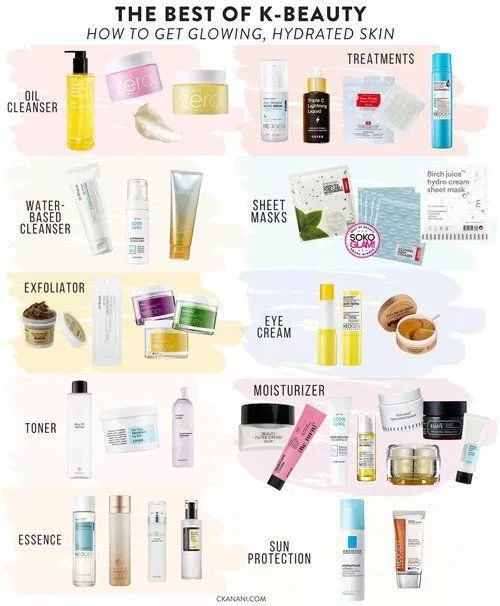
- Oil cleanser — dissolves sunscreen, makeup, and sebum
- Water-based cleanser — removes remaining impurities
- Exfoliant (2–3x/week) — AHA or BHA depending on your concern
- Toner — rebalances pH and preps skin for absorption
- Essence — lightweight hydration layer with fermented actives
- Serum/ampoule — concentrated treatment (vitamin C, retinol, niacinamide)
- Sheet mask (2–3x/week) — intensive delivery of hydrating ingredients
- Eye cream — targeted peptide and caffeine treatment
- Moisturizer — seals everything in with ceramides and emollients
- Sunscreen (AM only) — non-negotiable final step
Ingredient Pairing Rules
Not all actives play well together. Follow these rules to avoid irritation:
- Do pair: Niacinamide + hyaluronic acid (hydration powerhouse)
- Do pair: Vitamin C + vitamin E + ferulic acid (synergistic antioxidant protection)
- Do NOT pair: Retinol + AHA/BHA in the same routine (excessive exfoliation)
- Do NOT pair: Vitamin C + niacinamide at high concentrations (can reduce efficacy; alternate AM/PM)
- Do NOT pair: Benzoyl peroxide + retinol (deactivates retinol)
Warning: If you use a Korean vitamin C serum, wait 15–20 minutes before applying niacinamide. Layering them immediately can cause flushing in sensitive individuals.
Korean Beauty Skincare Ingredients and Benefits by Skin Concern
The most effective approach matches specific ingredients to your primary concern. One-size-fits-all routines waste both time and product.
Acne-Prone and Oily Skin
Your priority ingredients are BHA (salicylic acid), tea tree extract, and centella asiatica. BHA penetrates oil-clogged pores — something AHAs cannot do. Korean BHA formulations typically use betaine salicylate, a gentler derivative that delivers comparable results with less irritation.
- Use a BHA toner 3–4 times per week at night
- Follow with a lightweight snail mucin moisturizer
- Avoid heavy occlusives like shea butter or mineral oil
- Consider Korean toners formulated for oily skin as your foundation step
Dry and Sensitive Skin
Ceramides, hyaluronic acid, and madecassoside are your core ingredients. Korean brands excel at ceramide formulations because they use skin-identical ceramide ratios (ceramide NP, AP, and EOS in a 3:1:1 ratio). This mirrors your skin's natural lipid barrier composition.
Phytessence wakame, derived from Japanese sea kelp, appears frequently in Korean formulations for dry skin. It inhibits hyaluronidase, the enzyme that breaks down hyaluronic acid in your skin. The result: your natural hyaluronic acid lasts longer.
Anti-Aging and Firmness
Retinol, peptides, adenosine, and ginseng extract target the visible signs of aging. Korean anti-aging products stand out for their use of encapsulated retinol, which releases gradually and causes less irritation than conventional retinol.
- Adenosine — clinically proven to reduce wrinkle depth. Korean regulations require a minimum concentration for anti-wrinkle claims.
- Red ginseng extract — stimulates collagen synthesis and improves blood circulation to the skin surface.
- Peptides (Matrixyl, copper peptides) — signal your skin to produce more collagen without the irritation of retinoids.
K-Beauty Ingredient Costs: What to Expect
Korean beauty delivers exceptional value compared to Western luxury brands using identical ingredients. Understanding price tiers helps you allocate your budget strategically.
Budget, Mid-Range, and Premium Tiers
- Budget ($5–$15): Snail mucin, hyaluronic acid, aloe vera, green tea. Brands like COSRX and Some By Mi deliver clinical-grade concentrations at drugstore prices. Your cleanser and toner belong here — you use large volumes, so premium pricing wastes money.
- Mid-range ($15–$35): Niacinamide serums, ceramide moisturizers, BHA exfoliants, fermented essences. This tier offers optimized delivery systems that justify the premium. Invest here for your treatment steps.
- Premium ($35–$80+): Encapsulated retinol, multi-peptide complexes, rare botanical extracts (ginseng root, truffle). Reserve premium spending for targeted treatments where formulation technology genuinely matters.
The smartest K-beauty budget strategy: spend less on high-volume basics (cleansers, toners) and more on low-volume actives (serums, ampoules) where ingredient quality and delivery systems create measurable differences.
Korean Skincare Myths That Mislead Consumers
Misinformation about Korean beauty skincare ingredients and benefits circulates widely on social media. These myths cost you money and damage your skin.
The "All-Natural Is Always Better" Myth
Natural does not mean safe or effective. Poison ivy is natural. Essential oils are natural — and they are among the most common contact allergens in skincare. Korean labs use synthetic ingredients because they offer consistent purity, standardized concentrations, and better stability than plant-derived alternatives.
Synthetic hyaluronic acid is molecularly identical to the hyaluronic acid your skin produces. There is no functional difference. The "clean beauty" label has no regulatory definition in any market — it is pure marketing.
The "More Steps Means Better Skin" Myth
The famous "10-step Korean routine" is a Western media invention. Most Korean dermatologists recommend 4–6 steps tailored to your skin type. Additional steps increase the risk of ingredient conflicts, barrier disruption, and product pilling. A streamlined routine with well-chosen ingredients outperforms a 12-product regimen every time.
Ingredient Mistakes That Sabotage Your Results
Even informed consumers make avoidable errors. These two mistakes account for the majority of K-beauty complaints reported on forums and review sites.
Over-Exfoliation and Acid Overload
Using AHA, BHA, and enzyme exfoliants in the same week — or combining them in a single routine — strips your acid mantle. The visible damage appears 2–3 weeks later as persistent redness, sensitivity, and breakouts. Your skin needs its acid mantle to defend against bacteria and retain moisture.
Limit chemical exfoliation to 2–3 sessions per week maximum. Use one type of acid per session. If you add a new acid to your rotation, drop another. Your exfoliation budget is fixed — you cannot exceed it without consequences.
Skipping Sunscreen After Actives
Retinol, AHAs, BHAs, and vitamin C all increase your skin's photosensitivity. Using these ingredients without daily broad-spectrum SPF 50+ reverses their benefits and accelerates UV damage. Korean sunscreens use advanced UV filters (Tinosorb S, Uvinul A Plus) that provide superior protection with elegant, lightweight textures.
Apply sunscreen as the final step of your morning routine — every single day, including cloudy days and days spent indoors near windows. Reapply every two hours during direct sun exposure.
Frequently Asked Questions
What is the most important Korean skincare ingredient for beginners?
Hyaluronic acid. It suits all skin types, causes virtually no irritation, and delivers immediate visible hydration. Start with a hyaluronic acid serum or toner as your first K-beauty active, then add targeted ingredients once your skin adjusts.
Can you use Korean skincare ingredients if you have sensitive skin?
Yes. Korean brands produce some of the most effective sensitive-skin formulations available. Look for products containing centella asiatica, madecassoside, and ceramides. Avoid fragrance, essential oils, and high-concentration acids. Patch test every new product for 48 hours before full application.
How long does it take to see results from K-beauty ingredients?
Hydrating ingredients like hyaluronic acid show results within days. Brightening ingredients like niacinamide and vitamin C require 4–8 weeks of consistent use. Anti-aging ingredients like retinol and peptides need 8–12 weeks to produce visible changes in fine lines and firmness.
Are expensive Korean skincare products worth the price?
Not always. Many affordable Korean brands use identical active ingredients at the same concentrations as premium lines. The price difference often reflects packaging, marketing, and brand positioning rather than formulation quality. Focus on ingredient lists, not price tags.
Do Korean skincare ingredients conflict with Western products?
Korean and Western skincare ingredients are chemically identical — hyaluronic acid is hyaluronic acid regardless of where the product is manufactured. You can freely mix Korean and Western products in your routine. The key is understanding ingredient interactions, not brand origins.
Next Steps
- Audit your current routine. List every product you use and identify the active ingredients in each. Check for conflicts using the pairing rules above — eliminate redundant or incompatible products immediately.
- Choose one new active ingredient. Based on your primary skin concern, select a single K-beauty ingredient from the skin concern section. Purchase one product containing that ingredient and patch test it for 48 hours before incorporating it into your routine.
- Fix your storage. Move all vitamin C serums, retinol products, and fermented essences out of your bathroom. Store them in a cool, dark location or invest in a dedicated skincare mini-fridge to maximize potency and shelf life.
- Set a sunscreen non-negotiable. If you use any active ingredient — especially acids, retinol, or vitamin C — apply SPF 50+ broad-spectrum sunscreen every morning without exception. This single habit determines whether your actives help or harm your skin.


About Austin Park
Austin Park is a Korean beauty enthusiast and product researcher who has spent years studying the K-beauty industry — tracking ingredient trends, comparing formulations, and evaluating how Korean skincare and cosmetic brands perform for a wide range of skin types. His research-driven approach to product evaluation focuses on ingredient lists, brand transparency, and real-world results rather than marketing claims. At BestKoreanGuide, he covers Korean skincare routines, product reviews, and ingredient guides for readers building their first K-beauty routine or expanding an existing one.
You can get FREE Gifts. Or latest Free phones here.
Disable Ad block to reveal all the info. Once done, hit a button below