According to a survey by the Professional Beauty Association, airbrush makeup tips and tricks are searched over 40,000 times per month — yet fewer than 15% of home users report being satisfied with their first attempts. If you've invested in an airbrush system and feel like you're not getting that flawless, K-drama-worthy finish, you're not alone. The technique has a learning curve, but once you nail it, you'll wonder how you ever relied on sponges and brushes alone. Whether you're prepping your skin for a special event or building airbrush into your daily routine, this guide breaks down everything you need to master the technique.
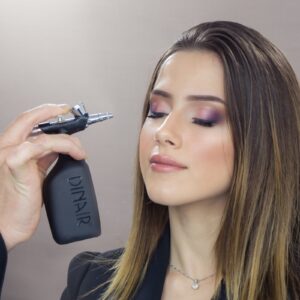
Airbrush makeup works by atomizing liquid foundation into a fine mist that settles onto your skin in micro-thin layers. The result is buildable, transfer-resistant coverage that photographs beautifully and lasts 12+ hours without touchups. Professional makeup artists have relied on airbrush systems for decades in film, bridal, and editorial work — and now compact, affordable units bring that same technology home.
The key difference between airbrush and traditional application is control. You're working with air pressure and distance rather than physical contact with your skin, which means less tugging, less product waste, and a more hygienic application overall. But it also means you need to retrain your muscle memory. Let's get into it.
Contents
The Science Behind Airbrush Foundation
Before you even pick up the airbrush gun, understanding what's happening at a molecular level helps you make better product choices. Airbrush foundation is formulated with smaller pigment particles than traditional liquid foundations — typically 2-5 microns versus 20-30 microns in bottled formulas. This is why the finish looks so seamless.
Water-Based vs. Silicone-Based Formulas
Your formula choice determines everything from wear time to how your skin breathes underneath. Here's a direct comparison:
| Feature | Water-Based | Silicone-Based |
|---|---|---|
| Finish | Natural, dewy | Satin to matte |
| Wear time | 8-10 hours | 12-18 hours |
| Best for skin type | Sensitive, dry, combination | Oily, normal |
| Buildability | Light to medium | Medium to full |
| Transfer resistance | Moderate | High |
| Cleanup | Water + mild soap | Requires airbrush cleaner |
| Pore visibility | Minimal blurring | Strong blurring effect |
If you have oily skin, silicone-based formulas grip better and resist breakdown from sebum. For those with reactive or dry skin, water-based formulas won't clog pores and layer beautifully over hydrating primers. Many K-beauty enthusiasts find that water-based airbrush foundation pairs perfectly with their multi-step skincare routine since it doesn't interfere with the hydration layers beneath.
Understanding PSI and Air Pressure
PSI (pounds per square inch) is the single most overlooked variable in airbrush makeup. Most home compressors operate between 15-50 PSI, but makeup application has a sweet spot:
- Foundation: 5-15 PSI (lower for sheer, higher for coverage)
- Blush and contour: 3-8 PSI
- Detail work (concealing, lips): 2-5 PSI
- Body makeup: 15-25 PSI
Start lower than you think you need. You can always increase pressure, but blasting product at high PSI creates splotches that are difficult to blend out. A good rule: if you feel significant air hitting your skin from 6 inches away, your pressure is too high for face work.
Pro tip: Test your PSI on the back of your hand before each session. The mist should feel like a gentle breath, not a breeze. If droplets are visible rather than a fine fog, reduce pressure by 2-3 PSI.
Your Complete Airbrush Application Guide
This is where most beginners struggle — and where the right airbrush makeup tips and tricks transform your results overnight. The technique is counterintuitive if you're used to traditional makeup, so approach it with fresh eyes.
Skin Prep That Makes or Breaks Your Finish
Airbrush foundation amplifies whatever's underneath. That means your skincare prep matters more, not less. Here's the non-negotiable sequence:
- Cleanse thoroughly — any oil or residue causes the mist to bead up rather than adhere. A proper cleansing oil followed by a water-based cleanser gives you the cleanest canvas.
- Apply a lightweight toner — this balances your skin's pH and helps foundation grip.
- Moisturize and wait 3-5 minutes — your skin must be hydrated but not damp. Tacky skin catches product unevenly.
- Apply primer (silicone primer for silicone foundation, water-based for water-based) — mixing base types causes separation.
- Wait another 2 minutes for primer to set completely.
Skip any step and you'll fight adhesion issues all day. The extra 10 minutes of prep saves you from frustration and foundation that slides off by noon.

Distance, Motion, and Layering
Three variables control your coverage: distance from skin, speed of movement, and number of passes. Master these and you master airbrush makeup.
- Distance: Hold the gun 4-6 inches from your face for foundation. Closer for spot concealing (2-3 inches), farther for blush diffusion (8-10 inches).
- Motion: Use small circular motions or steady side-to-side passes. Never stop moving while the trigger is pulled — that creates dark spots instantly.
- Layering: Build in thin passes. One pass = sheer coverage. Two passes = medium. Three = full. Always wait 10-15 seconds between passes to let each layer set.
The most common mistake is trying to achieve full coverage in one pass. That approach creates a mask-like finish and wastes product. Thin layers bond to each other and create dimensional, skin-like coverage that photographs naturally.
For under-eye concealing, reduce your PSI to 3-5 and work from 2-3 inches away using tiny circular motions. The delicate skin here needs minimal pressure. You can also pair this technique with a quality Korean concealer applied traditionally to problem spots before airbrushing over everything for a unified finish.
Airbrush Makeup Myths That Hold You Back
Misinformation keeps talented makeup enthusiasts from reaching their full potential with airbrush systems. Let's dismantle the biggest myths with evidence.
Myth: Airbrush Always Looks Heavy
This misconception comes from poorly executed stage and bridal makeup that prioritized coverage over artistry. In reality, airbrush deposits less product per layer than any other application method. A single pass of airbrush foundation uses roughly 0.01ml of product — compare that to the 0.5-1ml pump you'd press onto a sponge.
The "heavy" look comes from user error: too high PSI, too close distance, or too many passes in one area without letting layers dry. When applied correctly, airbrush produces the most natural finish available. The airbrush technique has been refined since the 1890s and modern cosmetic formulations are specifically engineered for ultra-sheer application.
Myth: It's Bad for Sensitive Skin
Actually, the opposite is true. Traditional application involves dragging brushes and sponges across your skin, creating friction that triggers redness and irritation. Airbrush has zero physical contact — the mist settles onto skin without pulling, tugging, or bacterial transfer from tools.
Water-based airbrush formulas are often simpler in ingredients than traditional foundations. Many contain fewer preservatives, no talc, and no mineral oil. If your skin reacts to conventional foundations, airbrush might be your solution rather than your problem. Just ensure your moisturizer for sensitive skin has fully absorbed before you begin.
Warning: Always sanitize your airbrush gun between uses. Bacteria thriving in leftover product is the actual skin irritant — not the application method itself. Flush with cleaner immediately after each session.
Advanced Airbrush Makeup Tips and Tricks for Contouring
Once you've mastered basic foundation application, contouring with an airbrush unlocks effects impossible to achieve with powder or cream products. The gradient blending happens automatically — no harsh lines, no visible edges.

Blush and Highlight Placement
Airbrush blush demands a lighter hand than you'd expect. The color is more concentrated than pressed blush, and it diffuses across a wider area due to the mist pattern.
- Drop PSI to 3-5 for blush application
- Hold the gun 8-10 inches away for a soft, diffused flush
- Start at the apple of the cheek and sweep toward the temple in one fluid motion
- One pass is usually sufficient — check in natural light before adding more
- For highlight, use a pearl or champagne shade at low pressure from 10+ inches away
The K-beauty "glass skin" effect is remarkably achievable with airbrush highlight. A single pass of a dewy highlight shade over the high points of your face creates that lit-from-within glow without any visible shimmer particles. This pairs beautifully with a hydrating face mist applied as a final setting step.
Sculpting Without Harsh Lines
The secret to natural airbrush contouring is working farther away than feels comfortable. At 8-12 inches, the contour shade falls in a soft gradient that mimics natural shadow. Here's the process:
- Load a shade 2-3 tones darker than your foundation
- Reduce PSI to 5-8
- Hold 8-10 inches from your face
- Follow the hollows of your cheeks, jawline, and temples with steady passes
- Build intensity gradually — it's far easier to add than to remove
If you over-contour, don't panic. A single pass of your foundation shade from the same distance will knock back intensity without starting over. This corrective layering is one of the biggest advantages airbrush has over traditional contouring.
Making Your Airbrush Makeup Last All Day
Airbrush makeup already outlasts traditional application by 4-6 hours on average. But with the right finishing techniques and equipment maintenance, you can push that to a full 16-18 hour wear time.
Setting and Sealing Techniques
You have three options for locking in your airbrush makeup:
- Airbrush setting spray: Load a setting solution into your gun and mist over your finished face at low PSI from 12 inches away. This creates the most even seal.
- Traditional setting spray: A fine-mist spray bottle works well. Hold at arm's length and press once — don't drench your face.
- Translucent powder (targeted): If you have oily zones, a light dusting of finely-milled Korean powder on the T-zone extends wear without compromising the airbrush finish elsewhere.
Avoid setting your entire face with powder. The airbrush finish looks best when it stays slightly luminous — heavy powder defeats the purpose. Target only the spots that tend to break down first: nose, chin, and between the brows.
Equipment Care for Consistent Results
A dirty airbrush produces inconsistent results no matter how good your technique is. Clean your gun after every single use — no exceptions. Dried product in the nozzle changes spray patterns and causes sputtering.
- Flush with appropriate cleaner (water for water-based, solvent for silicone) immediately after use
- Back-bubble by covering the nozzle and pulling the trigger to clear internal channels
- Deep clean weekly: disassemble the needle, nozzle cap, and fluid cup; soak in cleaner for 10 minutes
- Replace the needle every 6-12 months or immediately if you notice a bent tip
- Store with a drop of airbrush lubricant on the needle to prevent seizing
Think of it like cleaning your makeup brushes — neglect leads to breakouts, inconsistent application, and shorter tool lifespan. A well-maintained airbrush system lasts 5-10 years with minimal part replacement.
Frequently Asked Questions
Can I use regular liquid foundation in an airbrush gun?
No. Regular foundations have larger pigment particles and thicker consistencies that clog airbrush nozzles immediately. You need formulas specifically manufactured for airbrush systems — they have finer pigments and lower viscosity to atomize properly through small nozzles.
How long does it take to learn airbrush makeup?
Most people achieve competent results within 5-7 practice sessions. Expect your first 2-3 attempts to feel awkward as you calibrate distance and pressure. By week two of daily practice, the muscle memory clicks and application becomes faster than traditional methods.
Is airbrush makeup waterproof?
Silicone-based airbrush formulas are highly water-resistant and survive sweat, humidity, and light rain. Water-based formulas offer moderate water resistance. Neither is truly waterproof — prolonged submersion or heavy wiping will break down the finish, though they outperform traditional foundations significantly.
Can airbrush makeup cover acne and scars?
Yes, through layered building. You won't get full coverage in one pass, but 3-4 targeted passes at close range (2-3 inches) with reduced PSI build opaque coverage over blemishes and textured scars while maintaining a skin-like finish on surrounding areas.
How much does a good home airbrush system cost?
Quality home systems range from $80-$300. Budget options around $80-$120 work well for beginners. Mid-range systems ($150-$250) offer better compressors with consistent pressure. Professional-grade units ($300+) provide quieter operation and finer atomization but aren't necessary for personal use.
Do I still need primer with airbrush makeup?
Absolutely. Primer creates an adhesion layer that airbrush foundation bonds to. Without primer, the micro-fine mist has less grip on bare skin and breaks down faster. Match your primer base to your foundation base — silicone with silicone, water with water — for optimal longevity.
Next Steps
- Practice on your hand first — spend 10 minutes testing different PSI levels and distances on the back of your hand before touching your face. Note which settings produce a fine, even mist versus visible droplets.
- Invest in the right formula for your skin type — choose water-based if you have dry or sensitive skin, silicone-based if you're oily. Buy a small bottle first and test adhesion over your current skincare routine before committing to a full-size.
- Set up a cleaning station — keep your airbrush cleaner, a flush cup, and paper towels next to your system so post-session cleaning takes under 60 seconds. Consistency here prevents 90% of performance issues.
- Film yourself applying — record your first few sessions from a side angle. You'll immediately spot distance inconsistencies and areas where you're lingering too long that are invisible in the mirror.
- Build a complete prep routine — lock in your cleanser, toner, moisturizer, and primer sequence before focusing on airbrush technique. The foundation's performance ceiling is set by what's underneath it.


About Austin Park
Austin Park is a Korean beauty enthusiast and product researcher who has spent years studying the K-beauty industry — tracking ingredient trends, comparing formulations, and evaluating how Korean skincare and cosmetic brands perform for a wide range of skin types. His research-driven approach to product evaluation focuses on ingredient lists, brand transparency, and real-world results rather than marketing claims. At BestKoreanGuide, he covers Korean skincare routines, product reviews, and ingredient guides for readers building their first K-beauty routine or expanding an existing one.
You can get FREE Gifts. Or latest Free phones here.
Disable Ad block to reveal all the info. Once done, hit a button below