Picture this: someone just kicked off their shoes after a 12-hour day, looked down at cracked, peeling heels, and decided enough is enough. They pull up Amazon, type "Korean foot mask," and immediately get buried under dozens of options — peeling masks, hydrating boots, exfoliating socks — all promising baby-soft feet. We've been there, and after testing a wide range of K-beauty foot treatments throughout 2026, our team narrowed it down to the eight that actually deliver results.

Korean foot masks fall into two broad camps: exfoliating peels that dissolve dead skin over a week or two, and hydrating treatments that deliver instant moisture like a sheet mask for feet. Both have their place. The peeling types use acids (AHA, BHA, PHA) to trigger a dramatic shedding cycle, while the moisturizing boots rely on botanical extracts and ceramides for quick relief. Knowing which type fits the situation is half the battle — and that's exactly what this guide covers. For those who also deal with dry skin on the rest of the body, our roundup of the best Korean body lotions for dry skin is worth a look.
We evaluated each mask on ingredient quality, ease of use, how long results lasted, and overall value. Whether the goal is a deep peel that leaves feet completely renewed or a quick 20-minute moisture boost before sandal season, there's a standout pick here. Let's get into it.
Our Top Picks for 2026
- #PreviewProductRating
- Bestseller No. 1
 Rating:

- Bestseller No. 2
 Rating:
 - Bestseller No. 3
 Rating:
 - Bestseller No. 4
 Rating:
 - Bestseller No. 5
 Rating:
 - Bestseller No. 6
 Rating:
 - Bestseller No. 7
 Rating:
Product Reviews
1. TONYMOLY I'm Lovely Peach Foot Mask — Best for Quick Hydration
TONYMOLY has been a staple in K-beauty for years, and the I'm Lovely Peach Foot Mask is a perfect example of why. This is a hydrating boot-style mask, not an exfoliating peel, which makes it ideal for anyone who wants soft feet without waiting two weeks for skin to shed. Each box comes with five pairs, and the peach-and-honeysuckle formula smells genuinely pleasant — not the chemical-sweet scent that plagues cheaper masks.
Our team found that 20 minutes was the sweet spot. Slip the boots on, relax, and peel them off to find noticeably softer skin. The serum inside is generous without being so drippy that it creates a mess. For feet that are mildly dry or just tired from daily wear, this mask delivers immediate relief. It won't tackle heavy calluses or cracked heels — that's not what it's designed for. Think of it as a skincare maintenance step rather than a heavy-duty treatment.
The disposable boot design is a genuine convenience factor. There's no measuring, no spreading cream, and no wrapping feet in plastic wrap. Just tear open the packet, slide feet in, and wait. The fit runs slightly large, so those with smaller feet may want to secure the opening with a clip or rubber band for better contact with the serum.
Pros:
- Five-pack offers excellent value for a hydrating mask
- Peach and honeysuckle scent is natural and refreshing
- Results are visible immediately after the first use
Cons:
- Not effective on heavy calluses or severely cracked heels
- Boot sizing runs large for smaller feet
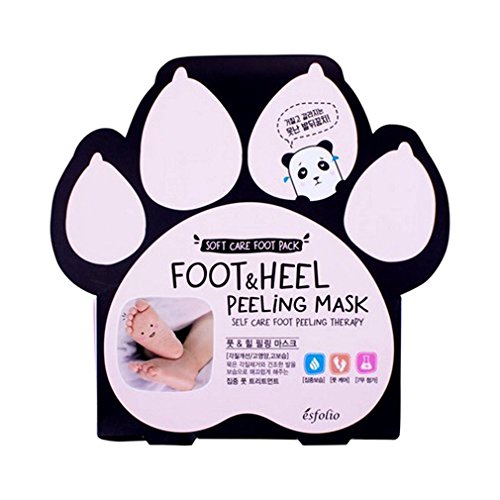
2. Esfolio Foot & Heel Peeling Mask — Best Budget Peel
For anyone who wants to try a Korean foot peel without committing to a multi-pack, the Esfolio Foot & Heel Peeling Mask is the entry point. It's a single-use peeling treatment that gently strips away dead skin cells while softening and moisturizing what's underneath. At its price point, it's one of the most affordable ways to experience the satisfying peel that K-beauty foot masks are famous for.
The formula works gradually. After wearing the mask for about 60–90 minutes, the peeling process begins within five to seven days. Our team noticed the shedding was less dramatic than some of the stronger peels on this list, which actually makes Esfolio a solid choice for first-timers who might be alarmed by aggressive peeling. The skin that emerges is smoother and softer, though anyone with thick calluses will likely need a second treatment a few weeks later.
One thing to keep in mind: this is a single pair. Most competitors sell three-packs or five-packs, so the per-treatment cost comparison isn't as favorable as the sticker price suggests. That said, for someone testing the waters or just needing a quick refresh before a vacation, a single treatment is exactly the right amount.
Pros:
- Very affordable single-pair option for trying foot peels
- Gentle formula suits sensitive skin and first-time users
- Leaves feet noticeably softer within a week
Cons:
- Single pair means less value compared to multi-packs
- Peeling is mild — heavy calluses may need multiple treatments
3. DERMAL KOREA Foot Peeling Mask 3 Pack — Best Deep Exfoliation
The DERMAL KOREA Foot Peeling Mask brings serious exfoliating power to the table. This three-pack uses a combination of AHA, BHA, and PHA — a triple-acid approach that targets dead skin at multiple depths. AHA works the surface, BHA penetrates into pores and crevices, and PHA provides gentler exfoliation with added hydration. It's a well-thought-out formula that balances effectiveness with aftercare.
After our team wore the mask for the recommended 90 minutes, peeling started around day five and continued for roughly two weeks. The shedding was significant — large sheets of dead skin came away, revealing genuinely smooth feet underneath. The addition of aloe vera, collagen, and eucalyptus means the new skin doesn't feel stripped or vulnerable. Instead, it's soft and properly moisturized from day one. According to the American Academy of Dermatology, keeping newly exfoliated skin moisturized is essential for maintaining results, and DERMAL clearly designed this mask with that principle in mind.
The three-pack makes this an excellent value for anyone planning to use foot peels as part of a regular routine. We recommend spacing treatments about six to eight weeks apart to allow the skin's natural barrier to fully rebuild between sessions. The ceramide content supports this recovery period, which sets DERMAL apart from cheaper peels that leave skin feeling raw.
Pros:
- Triple-acid formula (AHA, BHA, PHA) delivers thorough exfoliation
- Collagen and aloe vera prevent post-peel dryness
- Three-pack provides strong value for regular users
Cons:
- Peeling phase lasts up to two weeks, which may be inconvenient
- Not suitable for those with open cuts or wounds on feet
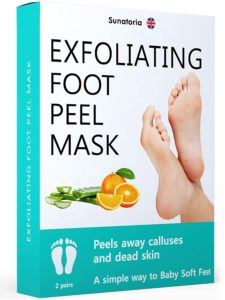
4. Purederm Shiny & Soft Foot Peeling Mask — Best Botanical Formula
Purederm takes a botanical-forward approach with its Shiny & Soft Foot Peeling Mask. The active ingredients lean heavily on natural extracts — lemon, orange, tea tree, and honey for exfoliation, with sunflower and coconut oils for post-peel moisture. The result is a peel that feels less clinical than acid-heavy competitors while still delivering visible skin renewal within 7 to 14 days.
Our team appreciated the gentle peeling action. Where some foot peels trigger aggressive shedding that can be messy and uncomfortable, Purederm's approach is more gradual. The dead skin starts lifting in sheets around day seven, continues for about a week, and the transition feels natural rather than forced. This three-pack is also cruelty-free — the brand does not test on animals — which matters to an increasing number of buyers in 2026.
The boot design is straightforward and comfortable enough to wear while sitting on the couch. We found that soaking feet in warm water for 10–15 minutes before application significantly improved the results, as softened skin absorbs the formula more effectively. Anyone who also takes care of their hands will appreciate how similar this philosophy is to the products in our best Korean hand masks roundup — gentle botanicals doing steady, reliable work.
Pros:
- Botanical ingredients make it suitable for sensitive skin
- Cruelty-free and not tested on animals
- Gradual, natural-feeling peel over 7–14 days
Cons:
- Slower results compared to acid-based peels
- Pre-soak is practically required for best results
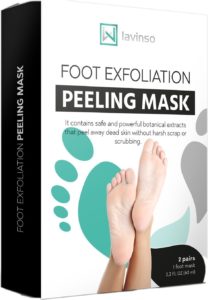
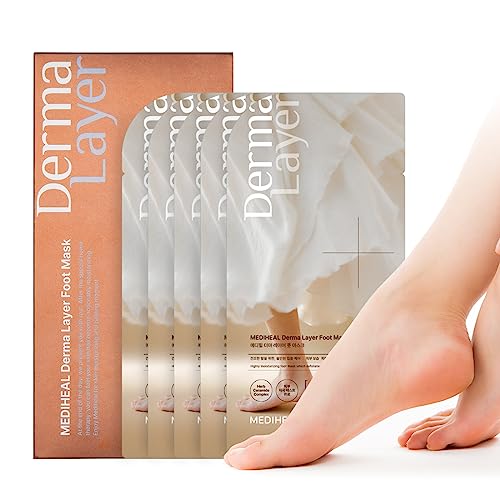
5. MEDIHEAL Derma Layer Foot Mask — Best Dermatologist-Tested Option
MEDIHEAL is one of the most trusted names in Korean sheet masks, and the Derma Layer Foot Mask extends that expertise down to the feet. This is a hydrating mask rather than a peeling treatment, formulated with herbal ceramides, aloe vera, and vitamin E. The five-pack comes in sock-style packaging that fits snugly, delivering concentrated moisture to dry feet, cracked heels, and rough toes.
What sets MEDIHEAL apart is the dermatologist-tested claim. While many foot masks make vague promises, this product has been evaluated by dermatologists for both safety and effectiveness. For buyers with sensitive skin or conditions like eczema on the feet, that added layer of clinical validation provides real peace of mind. Our team tested it on members with varying skin sensitivities, and no one reported irritation — even those who typically react to fragrance-heavy products.
The ceramide-based formula is the star here. Ceramides are lipids that naturally occur in the skin's barrier, and replenishing them helps feet retain moisture long after the mask comes off. We noticed that the hydration lasted a solid 48–72 hours, which is impressive for a single-use treatment. For anyone managing ongoing dry skin concerns, pairing these foot masks with a comprehensive approach — like the strategies outlined in our guide on how to take care of dry skin — produces even better long-term results.
Pros:
- Dermatologist-tested for safety and effectiveness
- Ceramide formula provides lasting 48–72 hour hydration
- Fragrance-light and suitable for sensitive skin
Cons:
- Does not exfoliate or peel — strictly a moisture treatment
- Premium price point compared to similar hydrating masks
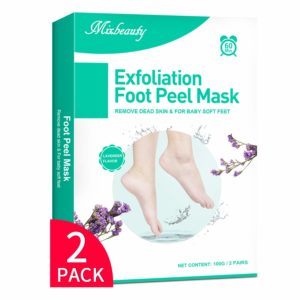
6. KOCOSTAR Premium Foot Therapy — Best for Heavy Calluses
KOCOSTAR's Premium Foot Therapy is built for the tough jobs. This five-pack exfoliating peel mask is designed to shed away hard calluses and thick, tough skin — the kind that pumice stones barely dent. The formula combines 33 botanical essences and herbal extracts that work together to break down dead skin while simultaneously soothing the fresh layers underneath. It's an impressive ingredient list that goes well beyond the basic acid-and-done approach.
The design improvements are worth noting. Extra-large adhesive tabs keep the mask boots securely in place, and the waterproof outer fabric means the treatment stays put even when walking around the house. Our team found this to be one of the most practical designs tested — no slipping, no leaking, and no awkward shuffling to avoid leaving wet footprints everywhere. The peeling began around day four and was thorough, stripping away layers of dead skin that revealed genuinely renewed feet beneath.
The only caveat is that the formula is potent. Anyone with very thin or already-sensitized skin on the feet should start with a shorter wear time (around 60 minutes instead of the full 90) to gauge tolerance. For the target audience — people with stubborn calluses, thick heel buildup, or feet that have been neglected through winter — KOCOSTAR delivers the most dramatic transformation on this list.
Pros:
- 33 botanical essences provide comprehensive exfoliation and hydration
- Extra-large adhesive tabs and waterproof outer for secure, mess-free wear
- Most effective option for thick calluses and severely rough feet
Cons:
- Formula may be too strong for already-thin or sensitive foot skin
- Full 90-minute wear time is longer than most competitors
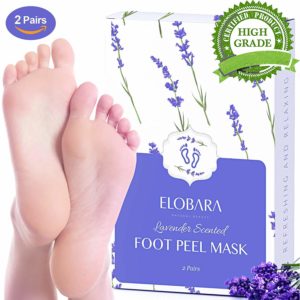
7. Koelf Melting Essence Foot Pack — Best for Deep Nourishment
The Koelf Melting Essence Foot Pack takes a different approach entirely. Instead of acids or peeling agents, this treatment relies on avocado oil and shea butter — two of the richest natural moisturizers available. The "melting essence" concept means the formula transforms from a solid-ish balm into a warm, absorbed treatment as body heat activates it. The 10-pair box is the largest quantity on this list, making it ideal for regular weekly use.
Our team was impressed by how deeply nourishing this mask felt. Within 20 minutes, feet went from dry and rough-textured to genuinely supple. The avocado-and-shea combination creates a protective layer that locks in moisture for hours after removal. This isn't a one-and-done dramatic peel — it's a consistent care product, more like a weekly foot conditioning treatment. For anyone who already has reasonably maintained feet and wants to keep them that way, Koelf is the smart choice.
The 10-pair count provides the best per-treatment value on this list. At roughly 2.5 months of weekly treatments per box, one purchase covers an entire season. The masks themselves are thin and comfortable, and the melting activation means there's minimal dripping or mess. The scent is mild and buttery — not everyone's preference, but far from offensive.
Pros:
- 10-pair box delivers outstanding long-term value
- Avocado and shea butter provide deep, lasting nourishment
- Melting essence formula activates with body heat for better absorption
Cons:
- No exfoliating or peeling action — strictly a moisturizing treatment
- Buttery scent may not appeal to all users
Buying Guide: How to Choose the Best Korean Foot Mask
Peeling vs. Hydrating: Know What the Feet Need
This is the most important decision. Peeling masks (Esfolio, DERMAL, Purederm, KOCOSTAR) use acids or botanical extracts to dissolve and shed dead skin over 1–2 weeks. They're best for callused, rough, or neglected feet that need a reset. Hydrating masks (TONYMOLY, MEDIHEAL, Koelf) deliver immediate moisture and softness without any peeling phase. They're ideal for maintenance, mild dryness, or anyone who can't afford visible peeling during sandal season. Some buyers alternate both types — a deep peel every six to eight weeks with hydrating treatments in between.
Ingredients Matter More Than Marketing
Look past the packaging and focus on what's actually in the formula. For peeling masks, the gold standard in 2026 is a combination of AHA and BHA — AHA resurfaces the outer layer while BHA penetrates deeper into skin folds and callused ridges. PHA is a gentler alternative for sensitive skin. For hydrating masks, ceramides are the ingredient to prioritize. They reinforce the skin barrier and extend moisture retention far beyond what basic glycerin-based formulas achieve. Botanical extracts like aloe vera, tea tree, and shea butter add supplementary benefits but shouldn't be the sole active ingredients.
Pack Size and Value
Foot masks range from single-use sachets to 10-pair boxes. For first-time buyers, starting with a single pair or small pack makes sense — there's no guarantee every formula agrees with every skin type. For those who already know what they like, bulk packs from Koelf (10 pairs) or KOCOSTAR (5 pairs) offer significantly better per-treatment value. Factor in that hydrating masks work best with weekly use, while peeling masks should be spaced 6–8 weeks apart. A five-pack of peeling masks could last nearly a year.
Fit, Comfort, and Practical Design
Boot-style foot masks need to make full contact with the skin to work properly. Loose-fitting masks waste product and deliver uneven results. Look for adjustable tabs, adhesive closures, or stretchy materials that accommodate different foot sizes. Waterproof outer layers are a genuine convenience — they allow walking around during treatment without leaving wet marks. Treatment time also varies widely, from 20 minutes for hydrating masks to 90 minutes for deep peels. Pick a treatment time that realistically fits into the routine rather than one that will get cut short.
What People Ask
How often should Korean foot masks be used?
It depends on the type. Hydrating foot masks like TONYMOLY and Koelf can be used weekly as part of a regular foot care routine. Exfoliating peel masks like DERMAL KOREA and KOCOSTAR should be used no more than once every six to eight weeks to allow the skin barrier to fully recover between treatments. Over-peeling can lead to sensitivity and thinning of the skin on the soles.
How long does the peeling process take after using a foot peel mask?
Most peeling foot masks begin the shedding process within 3–7 days after application, with the full peel completing in 10–14 days. The timeline varies based on skin thickness, how long the mask was worn, and whether the feet were pre-soaked. Soaking in warm water daily during the peeling phase can accelerate the process. The peeling is cosmetically noticeable, so plan accordingly if open-toed shoes are part of the daily wardrobe.
Are Korean foot masks safe for sensitive skin?
Hydrating foot masks (MEDIHEAL, TONYMOLY, Koelf) are generally safe for sensitive skin, especially the dermatologist-tested MEDIHEAL option. Peeling masks require more caution — the acids that dissolve dead skin can cause irritation on thin or reactive skin. Anyone with eczema, psoriasis, or open wounds on the feet should consult a dermatologist before using any peeling-type foot mask. A patch test on a small area is always a smart precaution.
Can foot peel masks remove thick calluses completely?
A single treatment can significantly reduce mild to moderate calluses, but thick, deeply established calluses typically require two to three treatments spaced six to eight weeks apart. KOCOSTAR Premium Foot Therapy and DERMAL KOREA offer the strongest formulas for callus removal on this list. For extremely thick calluses, combining foot peel masks with regular use of a pumice stone between treatments produces the best results.
What is the difference between AHA, BHA, and PHA in foot masks?
AHA (alpha hydroxy acid) works on the skin's surface to dissolve the bonds between dead cells, making it effective for general roughness. BHA (beta hydroxy acid) is oil-soluble, so it penetrates deeper into pores and crevices — particularly useful for thick, calloused areas. PHA (polyhydroxy acid) is the gentlest of the three, providing exfoliation with added humectant properties that draw moisture into the skin. The DERMAL KOREA mask uses all three for a comprehensive multi-layer approach.
Should feet be soaked before applying a Korean foot mask?
Soaking is not required for most foot masks, but it significantly improves results for peeling treatments. A 10–15 minute soak in warm water softens the outer layers of dead skin, allowing the mask's active ingredients to penetrate more deeply and evenly. For hydrating masks, soaking is less critical since the formula provides its own moisture. If soaking, avoid using soap or other products that might create a barrier between the skin and the mask's formula.
Buy on Walmart
- TONYMOLY I’m Lovely Peach Foot Mask – 5-Count Hydrating & So — Walmart Link
- Esfolio Foot & Heel Peeling Mask, 1 Ounce — Walmart Link
- DERMAL KOREA Foot Peeling Mask 3 Pack For Dry Foot And Crack — Walmart Link
- Purederm Shiny & Soft Foot Peeling Mask (3 pack) - For smoot — Walmart Link
- MEDIHEAL Derma Layer Foot Mask (5 Packs) for Dry Feet and To — Walmart Link
- KOCOSTAR Premium Foot Therapy | Exfoliating Peel Mask for Cr — Walmart Link
- Koelf Melting Essence Foot Pack, 10 Pairs — Walmart Link
Buy on eBay
- TONYMOLY I’m Lovely Peach Foot Mask – 5-Count Hydrating & So — eBay Link
- Esfolio Foot & Heel Peeling Mask, 1 Ounce — eBay Link
- DERMAL KOREA Foot Peeling Mask 3 Pack For Dry Foot And Crack — eBay Link
- Purederm Shiny & Soft Foot Peeling Mask (3 pack) - For smoot — eBay Link
- MEDIHEAL Derma Layer Foot Mask (5 Packs) for Dry Feet and To — eBay Link
- KOCOSTAR Premium Foot Therapy | Exfoliating Peel Mask for Cr — eBay Link
- Koelf Melting Essence Foot Pack, 10 Pairs — eBay Link
Key Takeaways
- The DERMAL KOREA Foot Peeling Mask is our top pick for deep exfoliation thanks to its triple-acid AHA/BHA/PHA formula and post-peel collagen care.
- For instant hydration without any peeling phase, the MEDIHEAL Derma Layer Foot Mask stands out with dermatologist-tested ceramide technology that keeps feet soft for up to 72 hours.
- The Koelf Melting Essence Foot Pack offers the best long-term value at 10 pairs per box, making it ideal for weekly moisture maintenance throughout 2026.
- Always match the mask type to the goal — peeling masks for callus removal and skin renewal, hydrating masks for ongoing moisture and softness.


About Austin Park
Austin Park is a Korean beauty enthusiast and product researcher who has spent years studying the K-beauty industry — tracking ingredient trends, comparing formulations, and evaluating how Korean skincare and cosmetic brands perform for a wide range of skin types. His research-driven approach to product evaluation focuses on ingredient lists, brand transparency, and real-world results rather than marketing claims. At BestKoreanGuide, he covers Korean skincare routines, product reviews, and ingredient guides for readers building their first K-beauty routine or expanding an existing one.
You can get FREE Gifts. Or latest Free phones here.
Disable Ad block to reveal all the info. Once done, hit a button below