A few years ago, I watched a friend pat toner onto her face after cleansing and honestly wondered if it was doing anything at all. Fast forward to today, and toner is the one step I refuse to skip. The benefits of using facial toners go far beyond what most people realize — they prep your skin, balance your pH, and help every product you layer on afterward work harder. If you're building a solid skincare routine, toner deserves a permanent spot in your lineup.

Korean beauty brands figured this out long before Western skincare caught up. In the K-beauty world, toner isn't an afterthought — it's the foundation of the entire multi-step routine. Whether you have oily, dry, or combination skin, the right toner bridges the gap between cleansing and moisturizing.
Let's break down exactly why toner matters, how to use it properly, and how to pick the best one for your skin type.
Contents
What Facial Toners Actually Do
Toners have changed dramatically over the past decade. The old-school astringent toners that burned your face are mostly gone. Modern toners — especially Korean ones — are hydrating, soothing, and packed with active ingredients. Here's what they actually accomplish:
- Balance your skin's pH after cleansing (most cleansers are alkaline)
- Remove residual dirt, oil, and makeup your cleanser missed
- Deliver a first layer of hydration to damp skin
- Improve absorption of serums, essences, and moisturizers
- Tighten the appearance of pores temporarily
Restoring Your Skin's pH Balance
Your skin's natural pH sits around 5.5 — slightly acidic. Most foam and gel cleansers push that number higher, leaving your skin in an alkaline state. This disrupts your acid mantle, the thin protective layer that keeps bacteria out and moisture in.
A good toner brings your pH back down quickly. When your acid mantle is intact, you'll notice:
- Fewer breakouts
- Less redness and irritation
- Better moisture retention throughout the day
The Second Cleanse You Didn't Know You Needed
Even after double cleansing, traces of sunscreen, pollution particles, and dead skin cells can linger. Swiping a toner-soaked cotton pad across your face picks up what's left. You'll see it on the pad — and it's eye-opening the first time.
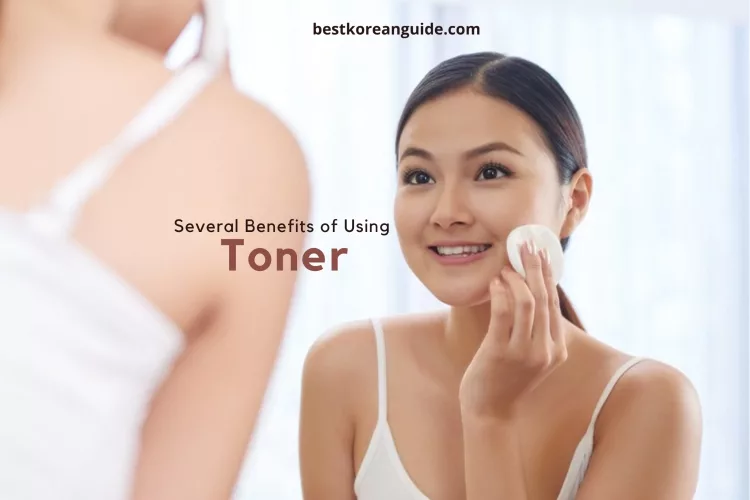
This extra cleansing step is especially important if you wear heavy sunscreen or live in a city with high air pollution. Think of toner as your skin's safety net.
How to Apply Toner the Right Way
Application method matters more than most people think. The benefits of using facial toners depend partly on how you put them on your skin.
Cotton Pad vs. Bare Hands
Both methods work, but they serve different purposes:
- Cotton pad — best for exfoliating toners or when you want that extra cleansing sweep. Use gentle, outward strokes. Never drag or tug.
- Bare hands — best for hydrating toners. Pour a small amount into your palms, press gently into your face, and pat until absorbed.
The patting technique is a K-beauty staple. It boosts circulation and helps the product penetrate deeper without wasting product on a cotton pad.
The 7-Skin Layering Method
This Korean technique involves applying up to seven thin layers of a hydrating toner. You don't need all seven — even two or three layers make a noticeable difference. Here's the process:
- Cleanse your face and pat it mostly dry (leave it slightly damp)
- Pour a small amount of toner into your palms
- Press and pat it into your skin
- Wait about 10 seconds
- Repeat 2-6 more times
- Follow with your serum or moisturizer
This method works best with lightweight, watery toners. Skip it with thick or exfoliating formulas — layering acids is asking for trouble.
Choosing the Right Toner for Your Skin Type
Not all toners are created equal. What works for oily skin can wreck dry skin, and vice versa. Here's a breakdown of what to look for based on your skin type.
Key Ingredients by Skin Type
| Skin Type | Best Ingredients | What They Do |
|---|---|---|
| Oily | BHA (salicylic acid), niacinamide, tea tree | Control excess sebum, minimize pores |
| Dry | Hyaluronic acid, ceramides, snail mucin | Deep hydration, barrier repair |
| Combination | Green tea, centella asiatica, aloe vera | Balance oily and dry zones |
| Sensitive | Centella, panthenol, madecassoside | Calm redness, reduce irritation |
| Acne-prone | AHA/BHA, tea tree, witch hazel | Exfoliate, fight bacteria, clear pores |
If you're dealing with oily skin specifically, Korean toners formulated with BHA can be a game changer. Check out some of the best Korean toners for oily skin to find options that control shine without stripping moisture.
Ingredients to Avoid
Some toner ingredients do more harm than good. Watch out for:
- Denatured alcohol (SD alcohol) — strips natural oils and damages your moisture barrier over time
- Synthetic fragrance — a common irritant, especially for sensitive skin
- Menthol or camphor — feels "refreshing" but causes micro-inflammation
- Witch hazel in high concentrations — can over-dry certain skin types
Read the label. If alcohol is in the first five ingredients, put it back on the shelf.
How Toners Transform Real Skincare Routines
Theory is great, but what actually happens when you commit to using toner daily? The results speak for themselves.
Visible Changes Over Time
Here's a general timeline of what consistent toner use looks like:
- Week 1-2: Skin feels softer and more hydrated immediately after application. You might notice your moisturizer absorbs faster.
- Week 3-4: Pores start looking smaller. Oily areas become less shiny by midday. Dry patches calm down.
- Month 2-3: Overall skin texture improves. Breakouts become less frequent. Your skin tone starts evening out.
- Month 4+: Cumulative benefits are clear. Your skin barrier is stronger, and you may find you need less makeup to cover imperfections.
The key is patience. Toner isn't a miracle product that works overnight. It's a slow, steady improvement that compounds over time.
Stacking Toner With Other Products
Toner works best as part of a complete routine. The classic K-beauty order is:
- Oil cleanser
- Water-based cleanser
- Toner
- Essence
- Serum or ampoule
- Moisturizer
- Sunscreen (morning only)
When you pair toner with the right products, each step amplifies the next. For example, applying a hydrating toner before a toner designed for acne targets lets the active ingredients penetrate more effectively. Your routine becomes greater than the sum of its parts.
Building a Long-Term Toner Routine
Using toner once or twice won't change your skin. The benefits of using facial toners come from making it a non-negotiable part of your daily routine — morning and night.
Switching Toners by Season
Your skin has different needs throughout the year. Smart toner users adjust accordingly:
- Summer: Switch to a lightweight, oil-controlling toner with BHA or niacinamide. Your skin produces more sebum in heat and humidity.
- Winter: Reach for a hydrating toner with hyaluronic acid or ceramides. Cold air and indoor heating strip moisture fast.
- Spring/Fall: A balanced toner with centella or green tea handles the transition without overcorrecting.
You don't need to overhaul your entire routine each season. Swapping just your toner can make a significant difference in how your skin handles environmental stress.
Why Consistency Beats Perfection
You don't need the most expensive toner on the market. You don't need a 15-step routine. What you need is consistency. Using an affordable toner every single day outperforms using a luxury product sporadically.
Here are simple ways to stay consistent:
- Keep your toner next to your cleanser so you never skip it
- Set a simple morning and night routine — cleanser, toner, moisturizer is enough to start
- Track your skin's progress with weekly photos (same lighting, same angle)
- Don't switch products every two weeks — give each toner at least 4-6 weeks before judging results
Frequently Asked Questions
Can I use toner every day?
Yes. Hydrating toners are safe for twice-daily use. If you're using an exfoliating toner with AHA or BHA, start with every other day and work up to daily use as your skin adjusts.
Do I really need toner if I already double cleanse?
Double cleansing removes makeup and impurities, but it doesn't restore your skin's pH or deliver the hydrating and active ingredients that toners provide. They serve different purposes, and toner fills a gap that cleansing alone cannot.
Should I apply toner to wet or dry skin?
Slightly damp skin is ideal. Water on your skin helps the toner spread evenly and absorb faster. Pat your face after cleansing but don't dry it completely before applying toner.
What's the difference between toner and essence?
Toners are thinner, focus on pH balancing and light hydration, and go on right after cleansing. Essences are slightly thicker, packed with concentrated active ingredients, and layer on after toner. Think of toner as the primer and essence as the treatment.
Can toner cause breakouts?
The wrong toner can. If your toner contains heavy oils, synthetic fragrance, or comedogenic ingredients, it may clog pores. Choose a non-comedogenic formula suited to your skin type, and patch test any new product for a few days before applying it to your full face.
Final Thoughts
Start with one toner that matches your skin type, use it morning and night after cleansing, and give it a solid month before you judge the results. Your skin barrier will thank you, your other products will work better, and you'll wonder why you ever skipped this step. Grab a bottle, commit to the routine, and let your skin show you what consistent care looks like.


About Austin Park
Austin Park is a Korean beauty enthusiast and product researcher who has spent years studying the K-beauty industry — tracking ingredient trends, comparing formulations, and evaluating how Korean skincare and cosmetic brands perform for a wide range of skin types. His research-driven approach to product evaluation focuses on ingredient lists, brand transparency, and real-world results rather than marketing claims. At BestKoreanGuide, he covers Korean skincare routines, product reviews, and ingredient guides for readers building their first K-beauty routine or expanding an existing one.
You can get FREE Gifts. Or latest Free phones here.
Disable Ad block to reveal all the info. Once done, hit a button below