You've probably spent more time than you'd like scrolling through sunscreen options, only to end up with something that leaves a chalky white cast or pills under your makeup by noon. Korean sunscreens have built a serious reputation for solving exactly those frustrations — lightweight textures, zero ghost-face effect, and formulas packed with skin-caring ingredients you'd want in a serum. In 2026, the lineup has only gotten better.
The Korean beauty industry treats sunscreen as a skincare step, not an afterthought. That philosophy shows in the formulas. Where many Western SPFs stop at UV filters and call it done, Korean brands layer in centella asiatica, hyaluronic acid, niacinamide, and probiotics — meaning your sunscreen is also hydrating, calming, and brightening your skin while it works. If you're already investing in a solid Korean skincare routine, sunscreen is the step that protects every other product you've applied.
This guide covers seven of the best Korean sunblocks available on Amazon right now. Each one has been evaluated for protection level, texture, ingredient quality, and real-world wearability. Whether your skin runs oily, dry, or somewhere in between, you'll find a strong match below. For more on building your full regimen, our roundup of the best Korean moisturizers for combination skin pairs well with any of these picks. And if you want to understand how SPF is actually measured and regulated, the American Academy of Dermatology has a clear breakdown worth bookmarking.
Contents
Our Top Picks for 2026
- #PreviewProductRating
- Bestseller No. 1
 Rating:

- Bestseller No. 2
 Rating:
 - Bestseller No. 3
 Rating:
 - Bestseller No. 4
 Rating:
 - Bestseller No. 5
 Rating:
 - Bestseller No. 6
 Rating:
 - Bestseller No. 7
 Rating:
Full Product Breakdowns
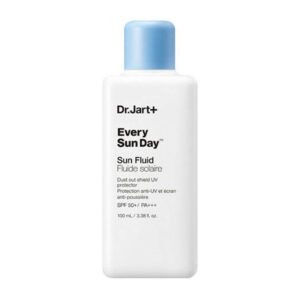
1. Dr.Jart+ Every Sun Day Sun Fluid SPF 50+ — Best for Sensitive Skin Daily Wear
Dr.Jart+ has been a trusted name in Korean skincare for years, and the Every Sun Day Sun Fluid is one of their most refined sunscreen offerings to date. The formula delivers broad-spectrum SPF 50+ protection against both UVA and UVB rays through a chemical filter system, which is a big reason why the texture feels so light. Chemical sunscreens don't sit on top of your skin the way mineral filters do — they absorb and neutralize UV rays from within, resulting in a formula that spreads easily and disappears without residue.
At 3.38 fl oz, you get a generous amount of product for a face sunscreen. Clinical testing on 33 women after a single application confirmed the no-white-cast claim, which makes a real difference if you have medium to deeper skin tones. The fluid consistency means it works well under foundation or BB cream without pilling — it layers like a lightweight moisturizer would. Daily wear is where this one shines; it doesn't feel like you're wearing sunscreen at all, which is exactly what you want when you're applying it every morning without fail.
The trade-off with chemical sunscreens is that they can occasionally trigger sensitivity in reactive skin types, especially around the eye area. If you run very sensitive or acne-prone, it's worth patch testing first. That said, Dr.Jart+ has formulated this to be gentle enough for most users, and the fluid formula keeps it from feeling heavy or congesting during warmer months.
Pros:
- Extremely lightweight fluid texture with zero white cast
- Strong SPF 50+ broad-spectrum coverage for everyday protection
- Layers seamlessly under makeup without pilling
Cons:
- Chemical filter formula may not suit very reactive or rosacea-prone skin
- No added skincare actives beyond UV protection
2. Centella Sunscreen SPF50 PA++++ — Best for Oily and Acne-Prone Skin
If your skin tends to produce excess oil or break out when sunscreen sits too heavily, this Centella Sunscreen is worth a close look. The formula achieves that rare balance of being genuinely oil-free and non-greasy while still delivering SPF 50+ PA++++ coverage — the highest possible PA rating, indicating very high protection against UVA-induced aging and pigmentation. PA ratings are a Korean system not commonly seen on Western products, and hitting PA++++ means this formula goes beyond basic broad-spectrum claims.
The ingredient list reads more like a serum than a sunscreen. Centella Asiatica works to calm inflammation and strengthen the skin barrier, while β-glucan (a polysaccharide derived from oats and other natural sources) provides deep hydration without a heavy film. Adenosine supports collagen synthesis and helps with fine lines over time, and Niacinamide — one of the most versatile skincare actives available — addresses uneven tone and pore appearance simultaneously. The fact that it's reef-safe is a meaningful bonus if environmental impact factors into your purchasing decisions.
The matte finish makes this particularly appealing for combination and oily skin types who dread the shiny, over-dewy look some Korean sunscreens produce by midday. It absorbs quickly and leaves a soft, powdery feel that works as a primer-like base. Dry skin types may find they need a richer moisturizer underneath to avoid any tightness, but for oily skin this is close to ideal.
Pros:
- SPF 50+ with maximum PA++++ protection against UVA rays
- Niacinamide and centella soothe while treating skin concerns
- Matte, oil-free finish that controls shine throughout the day
Cons:
- May feel too mattifying for those with dry or dehydrated skin
- Newer brand with less established track record than legacy Korean labels
3. SKIN1004 Centella Hyalu-Cica Water-Fit Sun Serum — Best Hydrating Serum Sunscreen
SKIN1004 built its brand around Centella Asiatica sourced from Madagascar, and the Hyalu-Cica Water-Fit Sun Serum is one of their most thoughtfully engineered products. What sets it apart from other centella sunscreens is the Hyalu-Cica complex — a combination of hyaluronic acid and Centella Asiatica Extract that works together to hydrate and soothe at the same time. Hyaluronic acid draws moisture into the skin, while centella helps repair and reinforce the barrier that keeps that moisture from escaping. Together, they make this formula genuinely helpful for compromised or post-procedure skin.
The texture is watery and serum-like, which explains the "Water-Fit" name. It applies almost like a toner — you can feel it absorb almost immediately. At 50ml in a travel-friendly size, it fits in a carry-on without stress, making it a practical choice for frequent travelers. The SPF 50 broad-spectrum protection is solid for daily city use, and the no-white-cast formulation means you can apply it without worrying about uneven patches or a gray tint under your foundation.
The lightweight serum format makes layering easier than with thicker creams, and it sits comfortably under makeup. If you're building a full routine on top of this, the serum-like consistency means you won't be fighting texture between your moisturizer and foundation steps. It's a smart choice if you already use a standalone moisturizer and want your SPF to stay thin. For ideas on pairing this with a good moisturizer, take a look at our guide to the best Korean face moisturizers in 2026.
Pros:
- Watery serum texture absorbs instantly with no residue
- Hyalu-Cica complex hydrates and soothes simultaneously
- Travel-sized 50ml and no white cast make it very practical
Cons:
- SPF 50 (not 50+) may be borderline for extended outdoor exposure
- Very lightweight formula may not provide enough moisture for dry skin on its own
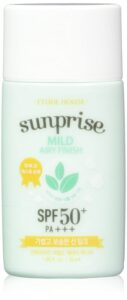
4. ETUDE Sunprise Mild Sun Milk SPF 50+ PA++++ — Best 100% Mineral Formula
ETUDE's Sunprise Mild Sun Milk earns its place on this list by solving one of the biggest complaints about mineral sunscreens: the heavy, chalky feel that makes so many people skip them entirely. This formula is 100% mineral and still lightweight — the "sun milk" consistency is thin enough to spread in a single motion and absorbs without leaving the greasy layer typical of zinc oxide or titanium dioxide formulas. For anyone who prefers physical blockers for sensitivity reasons or simply wants to avoid chemical UV filters, this is the most wearable option in that category.
ETUDE has engineered the formula to work as a makeup base, and it performs well in that role. The skin surface after application feels soft and slightly blurred, which gives a natural-looking base for foundation or BB cream. With SPF 50+ PA++++ it covers all the protection markers you'd want — the high PA rating means strong defense against UVA rays that drive premature aging, while SPF 50+ handles the burn-causing UVB range. At 55ml this is a useful size for daily use without running out too quickly.
Keep in mind that even the most refined mineral formulas have a higher chance of leaving some white cast on deeper skin tones than chemical alternatives. ETUDE has worked to minimize this, but if you have a medium-to-deep complexion you may want to test it on your jawline before committing. For very fair or light skin tones, the white cast concern largely disappears. Overall this is one of the best arguments in 2026 for going mineral if you've been hesitant.
Pros:
- 100% mineral formula with genuinely lightweight texture for the category
- SPF 50+ PA++++ — full protection on both UVA and UVB fronts
- Works as a smooth primer-like base under makeup
Cons:
- Possible white cast on medium to deeper skin tones
- Mineral formulas generally require slightly more rubbing in to distribute evenly
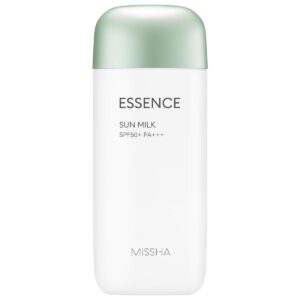
5. ROUND LAB Birch Juice Moisturizing UV Lock SPF 45 — Best for Dehydrated Skin
NBC Select's editorial team tested over 100 sunscreens and ranked this one first — and once you try the texture, it's easy to understand why. The ROUND LAB Birch Juice UV Lock doesn't feel like sunscreen. It applies like a hydrating lotion with a natural glow finish, absorbs smoothly, and leaves skin looking plump rather than coated. The hero ingredient is birch juice, which functions similarly to hyaluronic acid in drawing and retaining moisture, but with a lighter, more water-like delivery that works beautifully for dehydrated or dry-normal skin types.
This version has been reformulated specifically for the US market to meet SPF 45 Broad Spectrum OTC regulations, which means it goes through a different testing and registration process than its original Korean formulation. That's actually a sign of quality control rather than a downside — brands that bother to reformulate for regulatory compliance typically take efficacy seriously. The 2-pack value makes the price per unit very competitive for a sunscreen at this quality level.
The lotion-like consistency means it doubles as a light moisturizer, which simplifies your morning routine. You could apply this as your last skincare step and move straight to makeup. Fragrance-free and non-comedogenic, it suits sensitive skin types well. If you tend to run dry and find most sunscreens leave your skin looking flat by midday, this glow-finish formula is worth prioritizing. A note on SPF: at 45, it's excellent for everyday use and commuting, but if you're spending extended time outdoors, reapplication becomes especially important.
Pros:
- Ranked #1 by NBC Select out of 100+ sunscreens tested
- Birch juice delivers visible hydration with a healthy skin glow
- Fragrance-free, OTC registered, and excellent under makeup
Cons:
- SPF 45 is slightly lower than the SPF 50+ options on this list
- Glow finish may feel too dewy for those who prefer a matte look
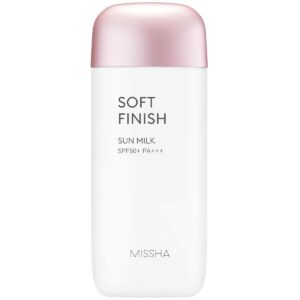
6. Innisfree Daily UV Defense SPF 36 — Best Dewy Finish for Everyday Wear
Innisfree won the 2023 Allure Best of Beauty award with this formula, and it remains one of the most accessible Korean sunscreens available in 2026. The SPF 36 rating is lower than most picks on this list, which the brand positions as intentional — designed for everyday city wear rather than beach days, with a focus on comfortable all-day texture over maximum SPF numbers. The ingredient highlight is a trio of Jeju Green Tea, Sunflower Seed Oil, and Cica, which together deliver hydration, soothing benefits, and barrier support beyond simple UV protection.
In home usage testing with 30 women, 86% confirmed no visible white cast after a single application. The finish lands in dewy territory — luminous without being wet or greasy — and the formula sits well under makeup with minimal interference. Green Tea extract from Jeju Island carries notable antioxidant properties that help neutralize free radicals generated by UV exposure, extending the protective effect of the SPF itself. For those who appreciate skincare with a sense of place and origin, Innisfree's commitment to Jeju-sourced botanicals is a genuine differentiator.
The honest caveat here is the SPF number. Dermatologists generally recommend SPF 30 as a minimum for daily use, and SPF 36 meets that bar comfortably for routine activities — commuting, office work, errands. But if you're spending significant time outdoors or in direct sunlight for extended periods, you'll want to reapply more frequently than with a higher SPF product. That said, for the person who wants their sunscreen to feel invisible and doubles as a skincare treatment, Innisfree is hard to beat on the wearability front.
Pros:
- Allure Best of Beauty winning formula with broad SPF 36 protection
- Green Tea and Cica ingredients soothe and hydrate skin
- Beautiful dewy finish that works for dry and normal skin types
Cons:
- SPF 36 is the lowest on this list — not ideal for heavy outdoor activity
- Dewy finish won't suit those looking for matte or oil-control
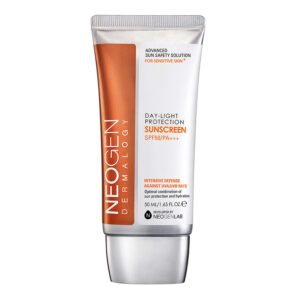
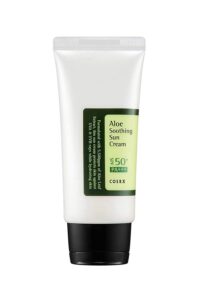
7. Relief Sun Organic Korean Sunscreen SPF 50+ PA++++ — Best with Nourishing Skin Ingredients
If you've ever used a toner with fermented ingredients or tried probiotic-focused skincare, the Relief Sun Organic brings that same philosophy to SPF. The formula pairs rice extract — long prized in Korean beauty for brightening and smoothing — with a skin-balancing probiotic complex that helps maintain the microbiome of the skin surface. It's an unusual combination for a sunscreen, and it works. Rice extract contributes to a naturally dewy, brightened finish while the probiotics work to reduce irritation and support resilience over time, making this a good long-term daily option rather than just a one-note UV shield.
The protection credentials are strong: SPF 50+ PA++++ puts it in the top tier for both UVB and UVA defense. Lightweight and non-greasy, it absorbs quickly without the tackiness that sometimes comes with more natural or organic-forward formulas. The claim of no white cast holds up for light to medium skin tones, and the dewy finish reads as fresh and healthy rather than overly shiny. It wears comfortably on its own or under makeup throughout a full day.
The organic and natural positioning does mean the ingredient list trends toward less-familiar names, so if you have known sensitivities to botanical extracts it's worth scanning the full ingredient list before purchasing. For most users though, this is a skin-kind option that brings genuine ingredient value to the SPF category. If you're building a routine around fermented or natural Korean skincare, this slots in naturally.
Pros:
- SPF 50+ PA++++ protection with skin-nourishing rice extract and probiotics
- Fresh, dewy finish that brightens without greasiness
- Supports skin microbiome health over time with probiotic blend
Cons:
- Botanical-heavy formula may trigger reactions in those sensitive to plant extracts
- Less brand recognition than established Korean names like Dr.Jart+ or Innisfree
How to Pick the Best Korean Sunblock
Understanding SPF and PA Ratings
SPF measures how well a sunscreen protects against UVB rays — the ones that cause sunburn. An SPF 50 formula blocks about 98% of UVB radiation, while SPF 30 blocks roughly 97%. The difference sounds small numerically but matters over repeated daily exposure. For most people with regular outdoor activity, SPF 50 or higher is the practical standard to aim for.
PA ratings are a Korean and Japanese system measuring UVA protection — the rays responsible for premature aging, pigmentation, and deeper skin damage. The scale runs from PA+ to PA++++, with each additional plus sign indicating significantly higher protection. PA++++ represents the highest tier and is a meaningful distinction when you're comparing products. Most of the best Korean sunscreens in 2026 carry PA++++ ratings, which makes them genuinely superior to many Western options that simply label themselves "broad spectrum" without specifying UVA protection levels.
Choosing the Right Texture for Your Skin Type
Korean sunscreens come in several texture categories, and matching the texture to your skin type affects both how the product performs and how likely you are to wear it consistently. Fluids and serums like the Dr.Jart+ and SKIN1004 options work best for normal to combination skin that doesn't need extra moisture in the SPF step. Sun milks like the ETUDE Sunprise sit between fluid and cream in consistency, making them versatile across skin types.
If you run dry or dehydrated, look for formulas with hydrating actives like hyaluronic acid or birch juice — the ROUND LAB and Innisfree options both deliver a moisturizing benefit alongside UV protection. Oily skin types benefit most from matte or oil-free finishes like the Centella Sunscreen SPF50, which controls shine rather than adding to it. For a deeper look at managing oily skin in your broader routine, our guide on how to take care of oily skin covers the full picture.
Chemical vs. Mineral UV Filters
Chemical UV filters (like octinoxate and avobenzone) absorb UV radiation and convert it to heat, resulting in thinner textures and zero white cast. They require 20-30 minutes to activate after application. Mineral filters (zinc oxide and titanium dioxide) sit on top of the skin and physically reflect UV rays — they work immediately upon application but can leave a white residue. Korean formulators have become extremely skilled at minimizing that effect, as the ETUDE Sunprise demonstrates, but it remains a consideration for deeper skin tones.
For sensitive or reactive skin, mineral formulas are generally considered gentler since the active ingredients don't penetrate the skin barrier. For everyday city wear where wearability and cosmetic elegance matter, chemical formulas tend to win on texture. Many Korean sunscreens now use hybrid approaches combining both filter types to balance protection and aesthetics.
How to Layer Sunscreen in Your Routine
Sunscreen goes on last in your morning skincare routine — after cleanser, toner, serum, and moisturizer, but before any makeup. Applying it last ensures the UV filters aren't diluted or disrupted by other products. Use a generous, even layer and don't rub it in aggressively — patting it gently helps the formula distribute without disturbing layers underneath.
If you're wearing makeup, reapply sunscreen every two hours when spending time outdoors. Setting sprays with SPF offer a practical way to reapply over makeup, though they generally don't provide the same coverage density as a full application. Pairing your sunscreen with a well-chosen moisturizer the night before sets your skin up to absorb SPF evenly — for that step, explore the best Korean night moisturizers of 2026 to find a formula that complements your morning routine.
Common Questions
What is the difference between SPF and PA ratings on Korean sunscreens?
SPF measures protection against UVB rays, which cause sunburn and contribute to skin cancer risk. PA ratings measure UVA protection — UVA rays penetrate deeper into the skin and drive premature aging, pigmentation, and long-term DNA damage. The PA scale runs from PA+ to PA++++, with PA++++ being the highest available. Korean sunscreens often display both ratings, giving you a more complete picture of coverage than the single SPF number common on Western products.
Do I need to wear sunscreen even when I stay indoors?
Yes — UVA rays penetrate glass, so windows in your home, office, or car don't provide meaningful protection. If you sit near windows during daylight hours, daily sunscreen application is still worthwhile. UVB rays are largely blocked by glass, so the burn risk is lower indoors, but cumulative UVA exposure through windows over years does contribute to skin aging and uneven tone.
How often should I reapply Korean sunscreen during the day?
Dermatologists recommend reapplying every two hours when you're outdoors in direct sunlight, or immediately after swimming or sweating heavily. For indoor or mixed indoor/outdoor days, a single morning application of SPF 50+ typically provides adequate protection. The key is using a sufficient amount — roughly a quarter teaspoon for your face — which most people underestimate in practice.
Are Korean sunscreens safe for reef ecosystems?
This depends on the formula. Some chemical UV filters — notably oxybenzone and octinoxate — have been flagged for contributing to coral bleaching and reef damage, leading to bans in places like Hawaii and the US Virgin Islands. Several Korean brands including the Centella Sunscreen SPF50 on this list explicitly formulate without these compounds and carry reef-safe claims. If environmental impact matters to you, look for formulas that specify they're free from oxybenzone and octinoxate.
Can I use Korean sunscreen under makeup?
Absolutely — and this is one area where Korean sunscreens genuinely excel. The lightweight textures and serum-like consistencies found in most Korean formulas are specifically engineered to layer under foundation, BB cream, and cushion without pilling or interfering with adherence. Allow the sunscreen to fully absorb (about one to two minutes) before applying makeup on top. The ROUND LAB, SKIN1004, and Dr.Jart+ options on this list are all routinely praised for seamless makeup compatibility.
What does "no white cast" actually mean in practice?
A white cast occurs when UV filter particles — particularly titanium dioxide and zinc oxide in mineral formulas — remain visible on the skin surface as a whitish or grayish tint. This is most noticeable on medium to deeper skin tones. "No white cast" formulas use micronized mineral particles or chemical filter systems that either absorb fully into the skin or disperse without leaving residue. For chemical sunscreens this is nearly universal, but for mineral formulas it requires more advanced engineering. Claims are sometimes tested on lighter skin tones only, so if you have a deeper complexion it's worth checking independent reviews or testing on your jaw before a full application.
Buy on Walmart
- Dr.Jart+ Every Sun Day Sun Fluid Korean Sunscreen SPF 50+ fo — Walmart Link
- Centella Sunscreen SPF50 PA++++ Calming Moisture Facial Suns — Walmart Link
- SKIN1004 Centella Hyalu-Cica Water-Fit Sun Serum UV, Korean — Walmart Link
- ETUDE Sunprise Sunscreen Mild Sun Milk SPF 50+ / PA++++ (55m — Walmart Link
- ROUND LAB Birch Juice Moisturizing UV LOCK SPF 45 Broadspect — Walmart Link
- Innisfree Daily UV Defense SPF 36 – Korean Face Sunscreen, I — Walmart Link
- Relief Sun Organic Korean sunscreen SPF50+, PA++++ Riceand P — Walmart Link
Buy on eBay
- Dr.Jart+ Every Sun Day Sun Fluid Korean Sunscreen SPF 50+ fo — eBay Link
- Centella Sunscreen SPF50 PA++++ Calming Moisture Facial Suns — eBay Link
- SKIN1004 Centella Hyalu-Cica Water-Fit Sun Serum UV, Korean — eBay Link
- ETUDE Sunprise Sunscreen Mild Sun Milk SPF 50+ / PA++++ (55m — eBay Link
- ROUND LAB Birch Juice Moisturizing UV LOCK SPF 45 Broadspect — eBay Link
- Innisfree Daily UV Defense SPF 36 – Korean Face Sunscreen, I — eBay Link
- Relief Sun Organic Korean sunscreen SPF50+, PA++++ Riceand P — eBay Link
The best Korean sunblock is simply the one you'll actually apply every morning — so prioritize the texture, finish, and feel that makes skipping it unthinkable.


About Austin Park
Austin Park is a Korean beauty enthusiast and product researcher who has spent years studying the K-beauty industry — tracking ingredient trends, comparing formulations, and evaluating how Korean skincare and cosmetic brands perform for a wide range of skin types. His research-driven approach to product evaluation focuses on ingredient lists, brand transparency, and real-world results rather than marketing claims. At BestKoreanGuide, he covers Korean skincare routines, product reviews, and ingredient guides for readers building their first K-beauty routine or expanding an existing one.
You can get FREE Gifts. Or latest Free phones here.
Disable Ad block to reveal all the info. Once done, hit a button below